
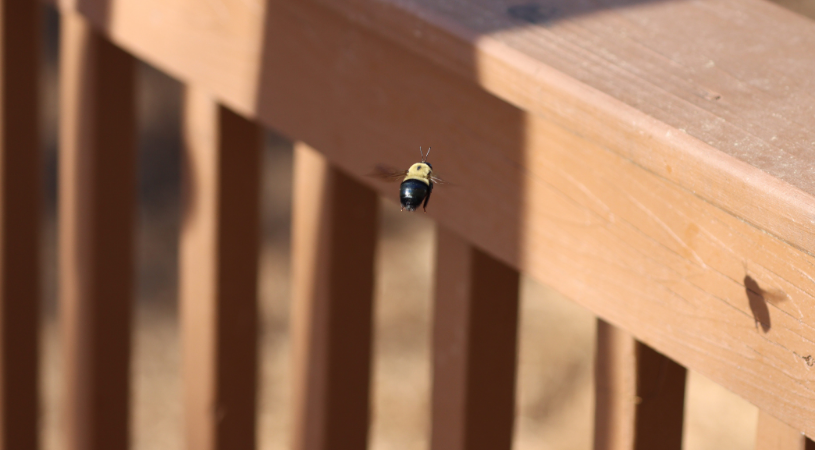
When homeowners first notice perfectly round holes drilled into decks, fences, or wooden siding, they are often surprised to learn the culprit is not termites, but carpenter bees. While these insects can cause frustrating damage to wood structures, they also serve an important role as pollinators. A useful management plan distinguishes prevention at unoccupied wood from the choices available when bees already occupy a tunnel.
What Are Carpenter Bees?
Carpenter bees are large, fuzzy bees often mistaken for bumblebees. Unlike termites, carpenter bees do not eat wood. Instead, they tunnel into untreated or weathered wood to create nests where they lay eggs. Common nesting locations include:
- Wooden decks
- Fascia boards
- Fences
- Porch railings
- Wooden outdoor furniture
Over time, repeated nesting can weaken wood and create cosmetic damage around your home.
Why Carpenter Bees Matter
Although carpenter bees are considered a nuisance pest, they are also valuable pollinators. Carpenter bees help pollinate flowers, gardens, and crops, making them beneficial to local ecosystems. Because pollinator populations have declined in recent years, many homeowners prefer solutions that discourage carpenter bees without harming them.
Prevention can reduce conflicts with carpenter bees, but established nests need a different assessment. Do not assume every trap or repellent is nonlethal, or that a surface treatment will make bees abandon an existing tunnel.
Preventing Damage While Considering Pollinators
Paint or Seal Exposed Wood
Maintaining a painted or otherwise protected wood surface can discourage new nesting. Results vary by finish and whether a tunnel already exists. Painting over an entrance is not a plan for managing bees already inside the wood.
Separate Prevention From Active-Nest Management
Penn State Extension discusses surface deterrents and alternative nesting wood as prevention options. These approaches do not reliably remove bees from established nests. Ask for species identification and a plan for the actual nesting site before applying products or blocking entrances.
Do Not Confuse a Trap With Nesting Habitat
A trap that captures bees is different from alternative nesting habitat. Do not describe a trap as a nonlethal relocation method without evidence about how that product works. If conserving pollinators is your priority, discuss prevention and suitable alternative nesting options with a qualified professional.
Fill Old Nesting Holes
Have the nesting site assessed before sealing a tunnel. An apparently empty entrance does not establish that the tunnel is unoccupied. Coordinate any treatment and the timing of wood repairs, and use safe access methods for eaves or other elevated locations.
Reduce Attractiveness Around Your Home
Woodpeckers are often attracted to carpenter bee larvae, which can lead to even more damage around nesting sites. Keeping wood protected and addressing carpenter bees early can help prevent secondary pest issues.
When to Call a Professional
If carpenter bee activity becomes extensive, professional pest control can help create a customized prevention plan that protects your home while minimizing harm to pollinators. At Nuclear Pest Control, we understand the importance of balancing effective pest management with environmentally responsible solutions.
Carpenter bees may be beneficial pollinators, but they should not be allowed to damage your home. Prevention and property-specific advice can help reduce conflict with these pollinators without promising that every established nest can be relocated unharmed.
For concerns about insects affecting your property, explore our general pest control service and ask which options suit the species involved.
Sources and further guidance
- Penn State Extension: Eastern carpenter bees
- Penn State Extension: Carpenter bee identification and management
Editorial update: November 9, 2026. See our source and review standards. Treatment instructions and written service terms are specific to your property.


Leave a Reply