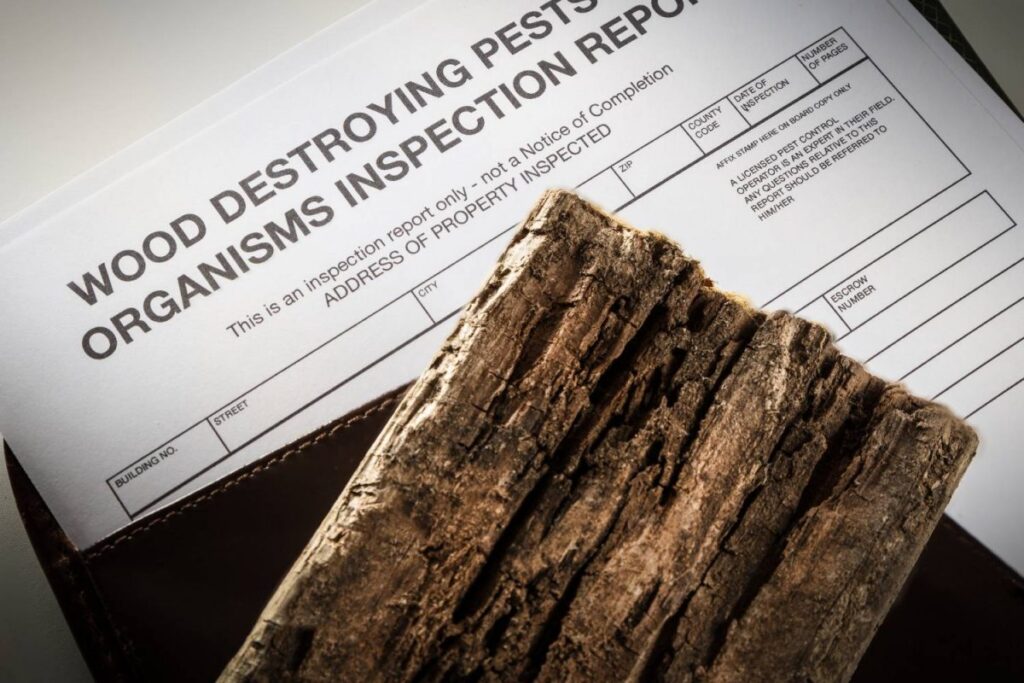
When buying or selling a home, a Wood Destroying Organism (WDO) letter is often a required part of the process. This report outlines whether there is any visible evidence of pests that can damage the structure of a home. While many people immediately think of termites, a WDO inspection actually covers several types of wood destroying organisms that homeowners should be aware of.
Termites are the most well known and most concerning pest found on a WDO letter. These insects feed on wood and can quietly cause significant structural damage over time. Subterranean termites, the most common type in our region, live in the soil and build mud tubes to access a home. Because they often remain hidden, a WDO inspection looks for signs like mud tubes, damaged wood, and discarded wings rather than the insects themselves.
Carpenter ants are another pest that may appear on a WDO report. Unlike termites, carpenter ants do not eat wood, but they tunnel through it to create nests. Over time, this can weaken wooden structures, especially in areas with excess moisture. Signs of carpenter ants include small piles of sawdust like material, known as frass, and faint rustling noises within walls.
Wood destroying beetles are also included in a WDO inspection. These insects lay their eggs in wood, and when the larvae hatch, they feed on the material as they grow. This can lead to small exit holes on the surface of wood and a fine powdery residue. Left untreated, infestations can continue for years and compromise the integrity of wooden components in the home.
Another common organism noted on a WDO letter is wood decay fungi. While not an insect, this type of fungus breaks down wood when moisture is present. It often appears in damp or poorly ventilated areas such as crawl spaces, basements, or around leaks. Wood decay can spread quickly if the underlying moisture issue is not addressed, leading to costly repairs.
It is important to understand that a WDO letter does not always mean there is an active infestation. In many cases, the report may note evidence of past activity or conditions that are conducive to future problems. This information is still critical, as it helps buyers and homeowners take the necessary steps to protect the property.
A WDO inspection provides valuable insight into the health of a home and can prevent unexpected surprises after closing. If any issues are found, they can often be treated and corrected before they turn into more serious damage.
At Nuclear Pest Control, we specialize in thorough WDO inspections and effective treatment solutions. Whether you are buying, selling, or simply want peace of mind, our team is here to help you protect your investment and keep your home pest free.